Finding Quanzhou in Penang: The Phoenix Mountain Temple Connection
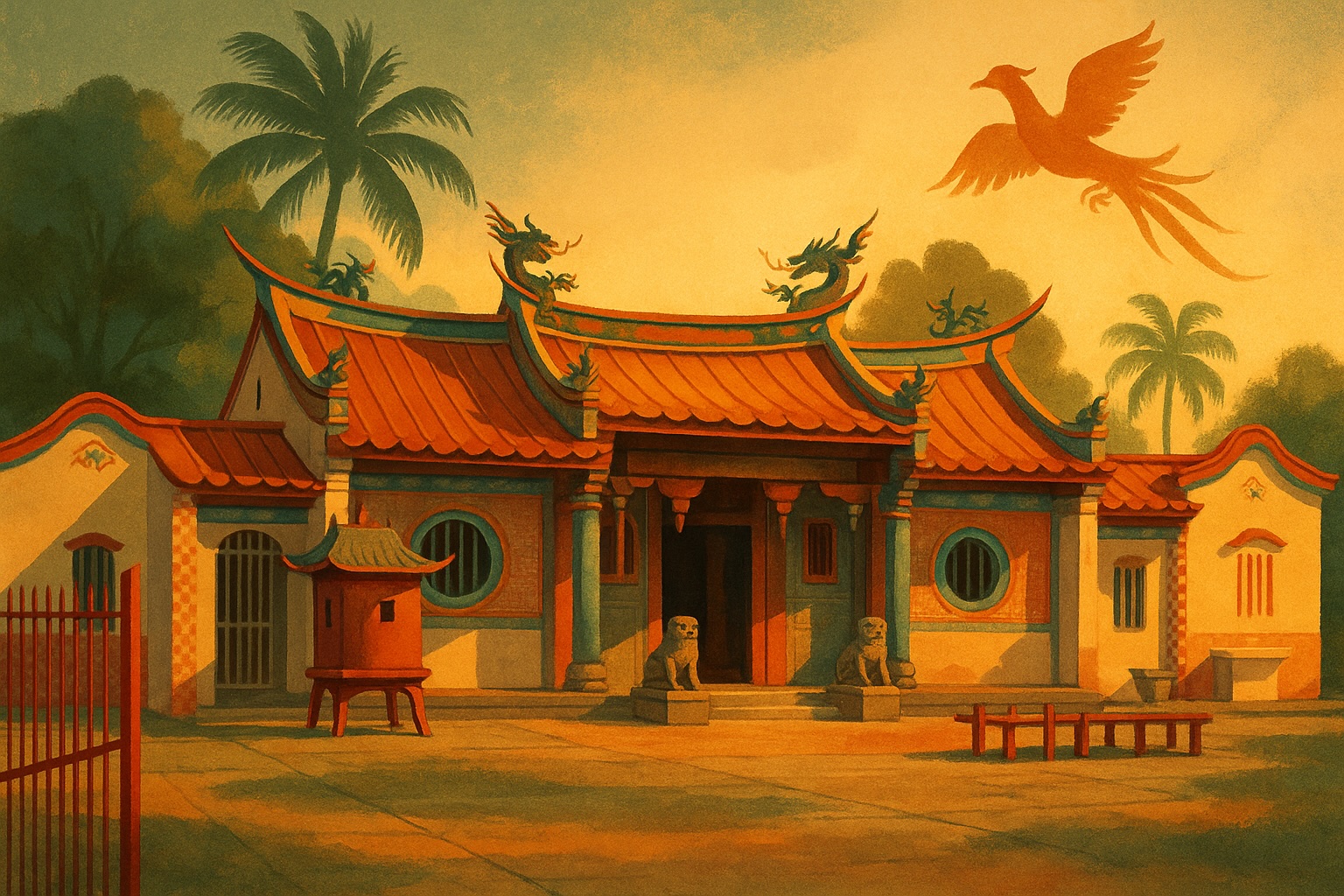
I’ve spent the morning wandering through Hong Sun Si Temple (鳳山寺, Phoenix Mountain Temple) in Penang, and I can’t stop thinking about the people who built this place.
Not the architecture—though it’s beautiful. Not the historic designation—though it absolutely deserves one. What’s captured my heart is the story of who these people were and why they came together.
The Coconut Grove Community
Picture this: It’s 1805. George Town is barely a decade old, still rough around the edges. And out in the coconut plantations, far from the merchant houses and trading posts, there are Hokkien farmers from three different districts of Quanzhou (泉州, “Spring Prefecture”)—Nan’an (南安), Yongchun (永春), and Anxi (安溪).
They’re not the wealthy traders you read about in history books. They’re agricultural workers, living among the palms, connected to town only by a dirt path from Green Lane.
And somehow, despite coming from different districts (which in Chinese diaspora communities often meant different clan loyalties, different dialects, different everything), they came together to build this temple.
That unity—that’s what makes Hong Sun Si special.
Why Quanzhou Matters
When I learned these farmers were from Quanzhou, something clicked.
Quanzhou wasn’t just any city. During the Song dynasty (宋朝) (12th-13th centuries), it was the seaport for Chinese foreign trade. The shipbuilding capital. The place where massive ocean-going junks were constructed to sail to Southeast Asia, India, and beyond.
Marco Polo (马可·波罗) famously said that for every shipload of pepper reaching Alexandria, one hundred ships arrived at Quanzhou. Ibn Battuta (伊本·白图泰), the Moroccan traveler, called it “the greatest” harbor in the world when he visited in 1345.
These coconut farmers in Penang? Their ancestors built the ships that connected China to the world. (I wrote about Quanzhou’s rise and fall as the world’s greatest port—it’s a story about what happens when trust networks outlast governments.)
So when they crossed 2,500 kilometers of ocean to settle in Malayan coconut groves, they weren’t just migrating—they were continuing a centuries-old tradition of going wherever the trade winds and opportunities took them.
Hong Sun Si Temple is what happens when that seafaring spirit meets a new land.
The Names on the Stone
There’s a stone inscription inside the temple from 1864—160 years old—listing three founding leaders:
- Meng Chengjin (孟成金) from Yongchun
- Liang Guangting (梁光庭) from Nan’an
- Yap Hup Keat (叶合吉) from Anxi
I stood there reading those names, thinking about what it meant for farmers from three different districts to share leadership. In Chinese diaspora communities, that kind of cooperation was rare. Usually, temples belonged to single clans or district associations—exclusive, protective of their own.
But Hong Sun Si was different. It was intentionally inclusive, designed to bring together the whole Hokkien community working in the plantations.
That tells me these weren’t just practical people looking for a place to worship. They were building something bigger—a shared identity for Quanzhou Hokkiens in a new land.
What I Keep Thinking About
Here’s what gets me: Hong Sun Si Temple connects two UNESCO World Heritage sites—Penang’s George Town (designated 2008) and Quanzhou’s Song-Yuan China Maritime Trade History (designated 2021).
But it does so quietly. There’s no big plaque announcing the connection. No tour buses pulling up. Just a working temple in a residential neighborhood, still serving the community after 220 years.
The people who built this place were agricultural workers—not wealthy merchants, not documented scholars. And yet they carried sophisticated cultural traditions across oceans, established community institutions, and created something that lasted two centuries.
That’s the Asia I love exploring: the layers of connection hiding in plain sight, the resilience of working people who built new lives far from home, the way culture travels through ordinary people doing extraordinary things.
If You Go
Hong Sun Si Temple sits on Jalan Dato Keramat (拿督吉拉末路) in Penang, away from the main tourist areas of George Town. It’s still an active place of worship, so visit respectfully.
The temple doesn’t have the fame of the clan temples downtown, but the history is just as profound—maybe more so, given its rare multi-district founding and working-class origins.
Go in the morning when the light is soft, when locals are lighting incense and the temple is alive with quiet devotion. That’s when you can feel the connection to those coconut farmers from Quanzhou who crossed an ocean and built something that endures.
I’m so glad I found this place. It’s exactly the kind of hidden gem that makes Brandmine’s work meaningful—illuminating the connections that have always been there, waiting for someone to notice.
This is part of our Updates series, where we explore hidden connections between Global South cultures and histories. For more discoveries from our journey, follow along here.