 Skip to main content


Resilient Brand
Dorsa
In 1995–96 Amirkazem Nourmohammadi and Shahin Fatemi put a name on goods they sold unbranded. Customers left, then no shop would stock them.
Tehran 🇮🇷
Leather goods manufacturers and designer brands producing bags, footwear, and accessories from domestically sourced hides. These companies span heritage tanneries with decades of craft knowledge to vertically integrated producers controlling the full chain from raw hide to finished product.

Emerging market leather producers sit on abundant raw materials that largely leave their countries semi-processed, returning as branded imports at multiples of the export price. The brands that capture the full value chain — from tanning through design to retail — represent the investable edge of a sector where sanctions and trade barriers have inadvertently accelerated domestic brand building.
Interactive map showing brand locations across emerging markets.
In 1995–96 Amirkazem Nourmohammadi and Shahin Fatemi put a name on goods they sold unbranded. Customers left, then no shop would stock them.
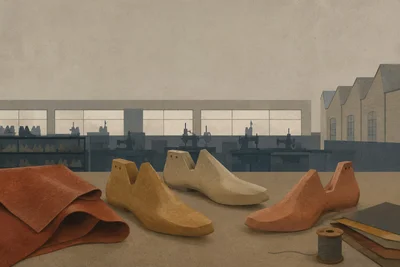
Russia's largest men's-shoe maker survived the bankruptcy of its own holding company — because it had never really been just one company.
When the ruble crashed in 2014, Gourji lost millions on Italian production overnight — then rebuilt its entire supply chain inside Russia.

In 1997 Reza Hamidi set up Mashad Leather to keep Iran's hides at home. Twenty years on, its chief executive found it in poor shape.
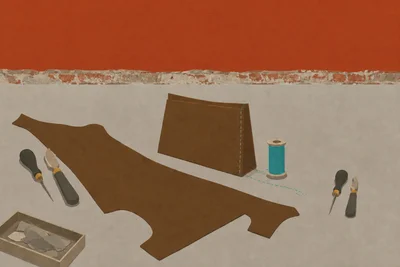
Sanctions banned the Italian leather and German hardware this workshop was built on. It kept growing anyway — how remains undisclosed.

Thailand's founder-owned brands survived three crisis waves. Four founders are near handover age. The succession wave has no map — until now.

A generation of founders forged by narco violence, FARC extortion, and two reform waves is exiting — into a market that has never learned to find them.
Sanctions eliminated Western competitors and forced a generation of Iranian founders to build from scratch. Those founders are now entering the succession window, still invisible to every database.

The NAFTA generation built Mexico's most exportable brand sectors. Now they are ageing out — with almost no succession plans and one buyer already ahead of everyone else.

A generation forged by compounding crises is entering the succession window. The first institutional buyer has already moved.

Two reform waves created two founder cohorts, both approaching the succession window simultaneously. The dual-crisis NDD archive makes Turkey the richest transformation market in the region.

A generation of founders forged by five crises in thirty years is entering the succession window. One buyer already holds four Argentine brands.

The founders who built Bangladesh's $47B garment industry are ageing out. They have a hard deadline: November 2026.

A generation forged by hyperinflation, six currencies, and a savings confiscation is entering the transition window. Most have no plan.

He and his partner sold house, car and shop, and rode taxis. By 2018 Dorsa used Swarovski crystals. Iran's leather sector hides 35 brands.
Type to search across all brands, founders, and insights