 Skip to main content
Resilient Brand
Monochrome
Told customers to stop buying during 2020 lockdown, paid staff from reserves — turnover doubled, ₽1.9B revenue by 2024, no investors.
Zelenograd 🇷🇺
Fashion and accessories showcasing design creativity, cultural influences, and practical international appeal. These designers blend traditional craftsmanship with contemporary aesthetics, creating wearable pieces that combine cultural identity with modern global trends.

Fashion brands with cultural authenticity command premium pricing and loyalty that trend-driven fast fashion can't match. These designers offer distinct aesthetics in markets increasingly hungry for alternatives to Western-dominated fashion narratives.
Interactive map showing brand locations across emerging markets. Use proximity search, view regional clusters, and explore nearby brands.
Told customers to stop buying during 2020 lockdown, paid staff from reserves — turnover doubled, ₽1.9B revenue by 2024, no investors.
GATE31 kept all 287 staff and every store open as demand cooled in 2026 — the exact decision that had already nearly killed it once, in 2017.
A Moscow skate label lost its home market and its famous co-founder inside two years, and kept the name, the team and the supply chain.
ZNY earned Selfridges and Paris Fashion Week standing over a decade. Sanctions closed that channel in 2022 — so it rebuilt at home instead.

Ruban lost every international channel it had by 2022 — then won the domestic luxury tier the departing Western maisons left behind.

A Moscow streetwear label survived 2022 sanctions and a failed store — a rival ran out of cash — by refusing to raise its ₽2,600 T-shirt price.
She kept her trademark out of a 2010 investor deal that then collapsed entirely — the one asset withheld became a ₽1.1B business.
Every Western stockist this Moscow house built since 2010 vanished in 2022. Her answer: Russia's first fully domestic collection.
China's No.1 suit brand became the world's top polarizer maker. Its founder died without a will. RMB33.55bn in claims followed.
In 2022 every Western luxury house Bosco imported for 30 years left Russia at once. A factory built three years earlier is why it survived.

A Murmansk label drifted eight years without an identity, then the 2020 lockdown forced a rebuild around real Arctic material logic.
Her couture was built on being Russian. In 2022 that identity lost its Paris stage — yet 2024 revenue climbed 23.8% past a billion roubles.
A Moscow couture house opened the month the ruble crashed in 1998 — and outlasted bankruptcy, lost buyers and sanctions on breadth, not scale.
Russia's largest men's-shoe maker survived the bankruptcy of its own holding company — because it had never really been just one company.
Shut down at peak visibility in 2018. The 2025 Grunovis-FZCO relaunch is legally distinct from the CDG original — not a revival, a reset.
He built Russia's most exported womenswear label, lost the name when the investor closed it, then rebuilt it — this time owning every piece.
From a ₽200K Yekaterinburg bet with no fashion training to ~₽786M and the Garage Museum — a federal brand built entirely on its own terms.
11 years off-calendar in Paris before FHCM admission. When sanctions removed the slot, the infrastructure that earned it remained.

From a Yekaterinburg home showroom to ₽11.9B — twelve monthly capsules, one sanctions crisis, and a GUM flagship on the floor Hermès vacated.

A Samara factory-floor brand captured 9% of the Moscow mall space H&M and Uniqlo vacated — then 5×'d revenue to ₽34.4B in three years.
When the ruble crashed in 2014, Gourji lost millions on Italian production overnight — then rebuilt its entire supply chain inside Russia.

A Moscow house proved "Russian style" meant silk, not matryoshkas — then its founder sold it in three pieces rather than watch it collapse.
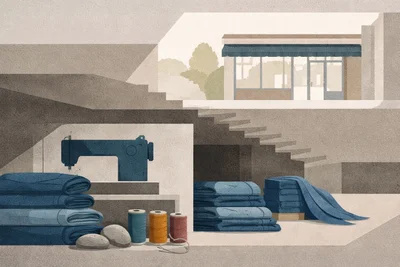
Gloria Jeans seized 200 Western storefronts in 2022 — then discovered that occupying a rival's space isn't the same as earning their customers.
Gigi Hadid wore its suits and Selfridges stocked it — then a 2022 export ban erased Lesyanebo's supply chain and Kyiv creative base overnight.
Three syllables from a Renaissance sculptor. A SGD 5,000 loan. A 95% stock crash survived. Southeast Asia's boldest foreign branding play.
Hebrew name. Israeli design. Chinese production. Russian stores. Boris Ostrobrod disguised "Russian" as "foreign" when domestic meant cheap.

From Ufa to Paris Fashion Week. Zero ad budget, Instagram-first. 150 stockists at peak—yet founder admits "all the same doubts—they are endless."
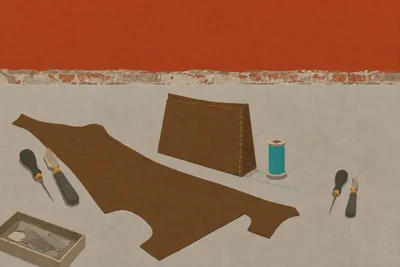
Sanctions banned the Italian leather and German hardware this workshop was built on. It kept growing anyway — how remains undisclosed.
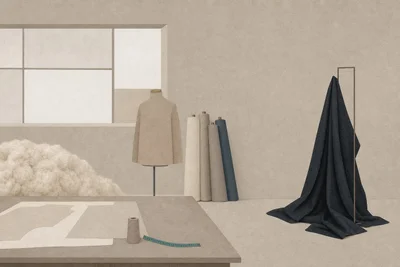
TEGIN's cashmere line survived sanctions when its European buyers vanished — the profit no one notices funds the concept no one can copy.
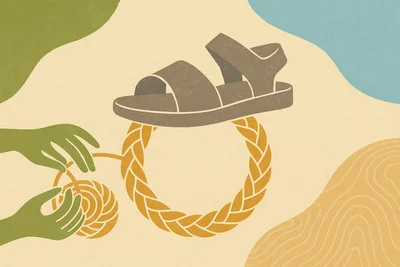
$5,000 on grandmother's land. 100,000 jobs created. Ethiopia's first global fashion brand, built on a technique the market had dismissed.
| Brand | City | Country | Year | Website | Tier |
|---|---|---|---|---|---|
| Loading... | |||||
| No brands found matching your criteria. | |||||
| Visit — | Resilient Profiled Listed | ||||

He told a magazine his son would inherit the company. He never wrote it down. A two-year war followed — and his family lost everything.

The world's #1 modest-fashion ecosystem was built by founders whose entire record — scale, crises, ownership — exists only in Bahasa Indonesia.

Two reform waves, a civil war, and zero succession infrastructure: Côte d'Ivoire's founder cohort enters the succession window simultaneously.

The 1994 CFA franc devaluation forged Senegal's founder generation. Four of the most prominent — all over 65 — have no succession plan.

When 500+ Western brands fled Russia in 2022, founder-owned labels hardened by three prior crises seized the vacuum — unwatched by the West.

Five Chinese-Malaysian and Bumiputera anchor brands are handing over now. Only one — Royal Selangor — has shown its governance template.

Thailand's founder-owned brands survived three crisis waves. The founders are 55–68. The succession wave has no map — until now.

Nepal's founders survived insurgency and earthquake to build lasting brands. Aged 55–75, they face succession alone — and no one was watching.

They built Tata, Godrej, and Wadia. They're disappearing at 10% per decade. The Parsi commercial story is running out of time.

A generation of founders who built Chile's export economy across 25 years of growth is now ageing out — with only 15% holding a succession plan.

Two reform-era founder cohorts are entering the succession window simultaneously. Only 21% have a plan. Most are invisible to any existing database.

A generation of founders forged by narco violence, FARC extortion, and two reform waves is exiting — into a market that has never learned to find them.

The newest private economy in the world is five years old and already producing brands. The window to document the founding generation is narrow.
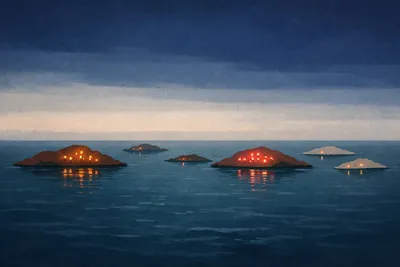
Two founding waves, one window: Indonesia's succession crisis is arriving on two schedules simultaneously, with a halal deadline forcing the pace.

Three crises. Three sectors. Thirty to forty founder-owned brands surviving the unsurvivable — and no institutional investor has found them.

A liberalisation wave created Morocco's founder generation. Now 150,000 family businesses approach transition with almost nothing in place.

Nigeria's first-generation consumer brand founders -- forged by the oil boom and tested by the naira crisis -- are entering the succession window with almost no plan.

A generation of founders forged by five crises — and 500 Western brand exits — is entering succession. The intelligence gap is total.

A reform wave that created new consumer sectors overnight. Two founder cohorts, one intelligence gap — both still largely undocumented.

Two validated exits, five PE funds already hunting, and only 11% of family businesses with a succession plan. The thesis is proved. The gap is still vast.

An empire of founder-owned brands built by people without Emirati passports -- and no institutional buyer has found them yet.

The founders who built Bangladesh's $47B garment industry are ageing out. They have a hard deadline: November 2026.

A generation forged by hyperinflation, six currencies, and a savings confiscation is entering the transition window. Most have no plan.

A nation of 3.4 million with seventy million livestock built a first generation of consumer brands from nothing. Now the founders are ageing out.

Ruble collapsed 70%. Competitors raised prices 200%. Ostrobrod froze them—destroyed margins built 30 years of customer loyalty.

When crises hit, emerging market brands don't scramble for suppliers—they own them. Infrastructure built for one crisis outlasted the next.

From provincial Ufa to Paris Fashion Week. No connections, no proximity, no fashion pedigree. Geographic disadvantage became creative edge.

$5,000 startup created 100,000 jobs across 45 countries. World's first Fair Trade footwear proved poverty wasn't the problem—invisibility was.
Type to search across all brands, founders, and insights