 Skip to main content
Resilient Brand
Shanshan Group
China's No.1 suit brand became the world's top polarizer maker. Its founder died without a will. RMB33.55bn in claims followed.
Ningbo, Zhejiang 🇨🇳
The world's second-largest economy with 1.4 billion consumers and rapidly expanding premium segments, where sophisticated digital infrastructure meets growing appetite for authentic Global South brands and cultural products.

World's largest consumer market with 1.4 billion people and sophisticated digital ecosystem, where founder-owned premium brands leverage heritage craftsmanship, regional terroir, and authentic storytelling to differentiate in competitive landscape.
Interactive map showing brand locations across emerging markets. Use proximity search, view regional clusters, and explore nearby brands.
China's No.1 suit brand became the world's top polarizer maker. Its founder died without a will. RMB33.55bn in claims followed.

Two crises tested the story-led model. The Golden Teardrop answered both — RMB 418M in 2024 fragrance sales, domestic category leader.

China's #3 beauty-services chain survived a collapsed A-share takeover and a pandemic loss year to exit at RMB 1.25 billion in 2025.
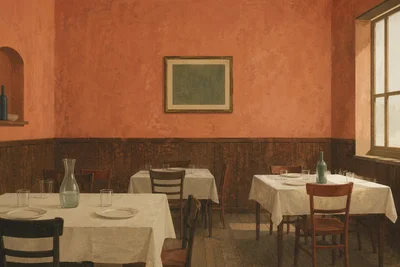
Twenty-seven years on the same Shanghai street — Da Marco closed voluntarily for two months in 2022 and found its customers still waiting.

Co-founder died. Founding designer expelled. Russia exited under sanctions. Eight pieces in the Kremlin Armoury — now headquartered in Hong Kong.
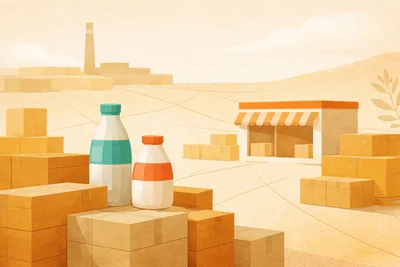
China's deepest distribution network — 1,500 dealers, every township — survived 29 lawsuits against Danone and the death of its founder.
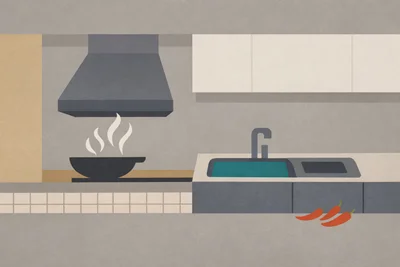
Raised prices during a price war, never went public, and holds more kitchen patents than the next nine Chinese competitors combined.

A restaurant chain built around cakes, a halal crisis that shut 297 outlets, and a 56-day sprint that turned compliance into a B2B supply channel.

Russia's only carbon-fiber jeweler lost its namesake designer in 2016 — and the rebrand proved more generative than the original.
Lost its own name for $25,000 in 1951. Watched it sell for $1.55B on toilet cleaner. Recovered it for $38M. Still unprofitable.
$187 in the bank. A court-declared death sentence. A dive watch whose seal tightens the deeper it goes. Russia's last watchmaker never stopped.

BAIC's Arcfox sold 266 cars in a single month. Three years and one complete identity surrender later, it sold 160,000 in a year.
FAW's neglected budget brand lost ¥18 billion while Hongqi got everything. A $3,700 micro-EV named Pony delivered 200,000 units in 20 months.
A weapons factory lost every profit engine at once. Its CEO fired 100 managers — and built three electric brands from the wreckage.
An eleven-year joint venture burned RMB 7.76 billion on 23,000 cars. Then BYD seized control and bet the relaunch on a minivan.
BYD built a brand for a category that barely existed. Then it nearly destroyed buyer trust before selling 50,868 vehicles in a single month.
Geely's first EV brand collapsed into ride-hailing fleets. Its replacement, Galaxy, delivered 494,000 vehicles in its second year — the fastest ramp in Chinese auto history.

China's presidential limousine sold 4,700 cars in 2017. One radical transformation later: 460,000 — but the EV push is stumbling.
A minivan maker in a third-tier Chinese city built a $4,500 USD EV with no airbags. It outsold Tesla globally within six months.

In 2010, BYD's quarterly profit dropped 99% and Elon Musk laughed on camera. A decade later, BYD outsold Tesla and surpassed its revenue.
97 employees sold their homes for a state-owned EV startup. First month: 879 deliveries. Three years later: 700,000 across 100 countries.
480,000 EVs delivered in one year — and Chinese consumers still call it 'the taxi car.' A ¥103B unicorn trapped in the wrong lane.
SAIC's profits fell 93%. IM Motors sold 455 cars a month while its closest peer went bankrupt. Survival required gutting its own price strategy.
Leapmotor's first car sold 1,000 units and triggered a government recall. Five years later, the company delivers 1,600 vehicles per day.
First product killed by regulators. Technology mocked as backward. Became China's first profitable EV startup — then MEGA wiped ¥100 billion.
NIO's finance team counted cash in ¥10,000 units while the stock sat at $1.19. The gap between survival and collapse was 1,000 vehicles.
Worst per-car loss in Chinese EVs in 2022. Three years later, Voyah replaced its Fortune 500 parent on the Hong Kong Stock Exchange.

When 400 Chinese EV brands collapsed, a phone company delivered 50,000 car orders in 27 minutes — and 600,000 vehicles in 22 months.

184 cars sold the month XPeng launched its flagship G9. Stock crashed 80%, ten executives left. Two years on: 197,000 vehicles in six months.
Forty brands cut prices when Tesla slashed the Model Y. Zeekr loaded more technology into cheaper vehicles — and tripled its margins.

From nine vehicles in its first month to 10,000 a month by 2024, Avatr shows what China's CHN triple alliance can build from nothing.
A freight forwarder, not a chef, built China's largest Italian food brand. When Shanghai locked down ten venues, his supply chain held.
In 2020, Seres sold 732 electric cars. It gave its brand to Huawei. Four years later, AITO outsold BMW in China's luxury segment.
Founded in 1892 on a dinner-party remark. Survived bankruptcy, occupation, and revolution. Won China's first-ever Decanter Best in Show.

Seven Shopify products hide a 500-year medical dynasty — 120+ herbal medicines, 1,300 pharmacies, and Mongolia's highest medical honor.
A misspelled surname, $500, and Deng's Southern Tour. Thirty-two years later: 27 offices, $50M revenue, six crises survived by staying put.

Launched during SARS into Shanghai's missing middle. Academy-trained consistency scaled across continents—then survived the founder's full exit.

Zero TV ads. Zero magazine spreads. 15,000 KOL partnerships. Perfect Diary proved trust networks beat ad budgets—#1 on Tmall.

Told for a decade that Thai luxury was impossible. Revenue hit zero during COVID. Then tripled to $32M — and KOSE paid $79M to acquire it.

Mongolia's first ISO-certified sea buckthorn factory — German-engineered on Chinggis Khan's winter camp, exporting to five countries.
| Brand | City | Country | Year | Website | Tier |
|---|---|---|---|---|---|
| Loading... | |||||
| No brands found matching your criteria. | |||||
| Visit — | Resilient Profiled Listed | ||||

The founder transition wave doesn't have one shape — it has six, and the shape is the first thing worth knowing about any market.

China's restaurant market is ¥5.5 trillion and barely 5% chain-owned. The founders who beat that number are aging out of that decision.
A winery listed on a national exchange, a kitchen-appliance maker with ¥17 billion in revenue, and a beverage company that reached several billion dollars in revenue all return nothing usable from the platforms built to find private companies.

A generation of founders across 46 markets is reaching the age at which businesses change hands — and almost none of it shows up in the data.

The first two papers argued the wave exists and standard instruments miss it. This shows what reading reveals: where visible, and what recurs in 23 handovers followed to an end.

He told a magazine his son would inherit the company. He never wrote it down. A two-year war followed — and his family lost everything.

Amber Xiang's 2011 thesis: the story is the margin. RMB 418M in fragrance sales later, it has proven impossible to compete with from below.

An A-share takeover collapsed. A pandemic dealt the only loss year. Seven years later, Beauty Farm paid RMB 1.25 billion for what survived.

$500 in 1992. 40+ offices by 2024. The founder who stayed 25 years in China sold to a Singapore platform — and the real question began.

One founder-owned firm gave Asian intelligence away free for twenty-five years — and spent nothing on advertising. No rival built the same shape.

They built Ghana's largest retailer, the UK's top vitamin brand, and the world's best-selling whisky. Almost nobody knows they are Sindhi.

Two reform-era founder cohorts are entering the succession window simultaneously. Only 21% have a plan. Most are invisible to any existing database.

¥190B invested. Seventeen cars from one brand. Three founders fled the country. Eight brands that prove capital is not resilience.

500 EV startups, ¥200B subsidies, 80% mortality. Six founder-owned survivors emerged from China's most brutal automotive shakeout.

A chef in Kuala Lumpur and a logistics man in Shanghai independently built Italian food empires by solving the same ingredient problem.

When Dezan Shira expanded to India and Vietnam in 2008, skeptics called it crazy. A decade later, US-China tensions proved the bet prescient.

Banned from Hong Kong, expelled from Japan. Sun Yat-sen found refuge in Penang, where merchants who never saw China funded its liberation.

In 1292, Marco Polo called it the greatest port in the world. Today most have never heard of it. The lesson: trust networks outlast governments.

$16B peak → 98% crash → the strategic lesson. Traffic arbitrage builds awareness, not loyalty. Only brand equity protects margins.
Type to search across all brands, founders, and insights