 Skip to main content
Crossroads
🇮🇳
14 min read
Hyderabad: Trade That Outlived the Kingdom
A 1591 crossroads city built an empire on diamonds, lost its capital twice, and still exports a cuisine it never quite gets to own.
Intelligence from emerging markets moving faster than headlines suggest.

Not think pieces. Not trend reports. Business intelligence on specific brands, founders, and markets—the proof layer that data platforms can't provide.
A 1591 crossroads city built an empire on diamonds, lost its capital twice, and still exports a cuisine it never quite gets to own.

The founder transition wave doesn't have one shape — it has six, and the shape is the first thing worth knowing about any market.

China's restaurant market is ¥5.5 trillion and barely 5% chain-owned. The founders who beat that number are aging out of that decision.

The first two papers argued the wave exists and standard instruments miss it. This shows what reading reveals: where visible, and what recurs in 23 handovers followed to an end.

A generation of founders across 46 markets is reaching the age at which businesses change hands — and almost none of it shows up in the data.

Executive summaries of the Brandmine Intelligence Whitepaper series: the founder transition wave, why it is hard to see, and what following the record to an ending shows.
A winery listed on a national exchange, a kitchen-appliance maker with ¥17 billion in revenue, and a beverage company that reached several billion dollars in revenue all return nothing usable from the platforms built to find private companies.

Phoenician port, Spanish presidio, EU border, live fault line — Melilla survived by repricing what it sells to whoever holds power.

Portugal captured the rock in a matter of hours in 1415 — and lost the trade network overnight. Ceuta has never recovered its centrality since.

Three Russian bakery-café founders hit the same cost squeeze. One named his limit and held it. One sold. One died before the question resolved.

Russia's best coffee brands aren't in Moscow — and 2022 didn't kill the ones that survived. It proved which founders still held the wheel.

UNESCO named George Town's heritage worth protecting in 2008. The listing then displaced 82% of the residents that heritage depended on.

He told a magazine his son would inherit the company. He never wrote it down. A two-year war followed — and his family lost everything.

A generation of Filipino founders built the nation's love of its own fast food — then, one by one, sold the brands to the rival they'd beaten.

The world's #1 modest-fashion ecosystem was built by founders whose entire record — scale, crises, ownership — exists only in Bahasa Indonesia.

A few founders built Malaysia's modern bakery sector through three crises. In 2024–2026 they are all handing it over at once — unwatched.

Ayutthaya was one of the richest cities on Earth — until 1767, when the trading companies that built its wealth sailed home and left it to burn.

The first European city in the tropics ran on the Atlantic slave trade. When direct routes made it obsolete, only one thing it built survived.

Ouidah exported over a million enslaved Africans — the one thing it could not control was the religion they carried out the Door of No Return.

The JAKIM halal stamp clears 100+ OIC markets in one move — the supply-chain barrier no Western QSR spent the decades to build.

Twenty-nine years of war produced no peace in Aceh. Then a tsunami that killed 170,000 produced a signed settlement in 232 days.

Amber Xiang's 2011 thesis: the story is the margin. RMB 418M in fragrance sales later, it has proven impossible to compete with from below.
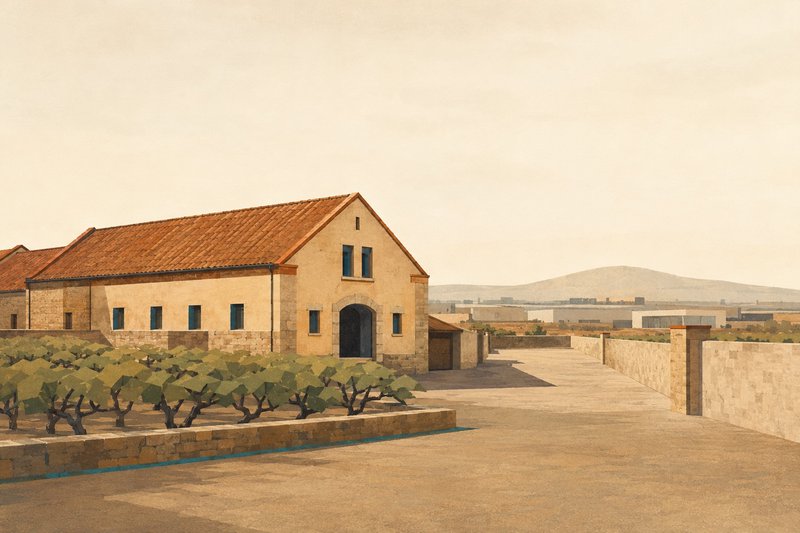
Serbia's post-2000 founders — wine, rakija, organic food — are now 50–68. The EU accession clock is running and no one is watching.

Serbia's wine sector restarted from zero in 1990. Its export bet is a grape the West can't benchmark — and the China window just opened.

Four ruptures filtered Kyrgyzstan's bazaar founders to the most crisis-tested. The 1991 cohort is now 55–70. No investor has mapped them.

Kyrgyzstan's certified natural-food exporters are Central Asia's best-documented secret — invisible behind a Russian-language wall.

Three revolutions, two ruble shocks, a jailed founder, a pork-DNA war with Moscow — Kyrgyzstan's food founders survived all of it.

Uncles sold the 111-year-old TCM company. Fourth-generation heirs bought it back for S$21 million. Thirty years later: S$808M exit.

Told for a decade that Thai luxury was impossible. Revenue hit zero during COVID. Then tripled to $32M — and KOSE paid $79M to own it.

A €30–40M Crimean winery, a presidential visit no one recorded, and an owner traced through offshore shells. Welcome to court winemaking.

An A-share takeover collapsed. A pandemic dealt the only loss year. Seven years later, Beauty Farm paid RMB 1.25 billion for what survived.

Saudi Arabia holds the world's largest Arabic perfumery market. The houses dominating global discourse are UAE. Four Saudi houses anchor home.

Tunisia created AfricInvest — Africa's most active PE fund. It has never documented its own founder generation's succession situation.

Three crises in five years forged Tanzania's founder cohort. No database captures what they survived. One succession is already in motion.

The 1994 CFA franc devaluation forged Senegal's founder generation. Four of the most prominent — all over 65 — have no succession plan.

A 1992 ceasefire built Mozambique's private sector. That founder cohort — now 52–72 — is entering succession, and the wave is already breaking.

Two succession waves are converging in Jordan — Palestinian merchant diaspora and IMF-reform founders — neither visible to institutional capital.

Two reform waves, a civil war, and zero succession infrastructure: Côte d'Ivoire's founder cohort enters the succession window simultaneously.

Japan paid premium prices for the wellness brands on Karmakamet's corridor. The two that refused to sell are now Japan's next target.

When 500+ Western brands fled Russia in 2022, founder-owned labels hardened by three prior crises seized the vacuum — unwatched by the West.

An Ipoh institution's third-generation cook died at 48 with no named heir. A whole heritage-restaurant cohort is hitting succession at once.

George Town lost 82% of its residents in 16 years. Its century-old food houses survived — by handing the recipes to a new generation.

A Philippine giant paid RM1.925 billion for a Malaysian biscuit maker. The asset wasn't the biscuits — it was the halal stamp behind them.

Five Chinese-Malaysian and Bumiputera anchor brands are handing over now. Only one — Royal Selangor — has shown its governance template.

80+ outlets, 400K combined followers, zero legal right to work. Malaysia's Middle Eastern restaurant economy operates in legal twilight.

Three founder-to-next-generation handovers documented. Sixty percent of Malaysia's boutique heritage founders are still mid-transition.

Malaysia's schools, colleges and universities were built by the same aging founders — and several families control all three tiers at once.

Malaysia's largest beauty chain runs 130-plus branches across three countries. No English-language database carries it. Hannan is half the story.

Thailand's herbal dynasties survived the state, PE buyers, and a K-pop factory crisis. The sector's investable layer is smaller — and stronger.

Three completed handovers. One patriarch still in the chair. Thailand's restaurant dynasties are mid-succession — and no database has noticed.

Thailand's founder-owned brands survived three crisis waves. The founders are 55–68. The succession wave has no map — until now.

Factory submerged, daughter who quit academia, cooperative outlasting its founder's death. Thailand's tea-coffee sector hides in plain sight.

Seven Sino-Thai snack dynasties built between 1925 and 1972. Three Bangkok Stock Exchange listings later, the succession test is running.

Chile's food-labelling rules left Peru's snack market with one already-compliant brand — a 30-year founder bet Alicorp valued at USD 72.2M.

13 founder-owned hotel groups. Three crises in 25 years. Invisible to Western databases. Michelin found them in September 2024.

A Chiuchow fishmonger bottled Thailand's first fish sauce in 1910. Five families built the sector. The world buys it without knowing them.

$500 in 1992. 40+ offices by 2024. The founder who stayed 25 years in China sold to a Singapore platform — and the real question began.

Britain's surveyors ruled Suakin's harbour mediocre and chose a bay 58km north. The working port's coral dissolved within a generation.

The most innovative state in 18th-century India out-engineered the British on multiple fronts — and still lost. The ideas outlasted the defeat.

Portugal's mandatory East Africa waystation thrived for 400 years on its geography. When steam replaced sail, that geography became a liability.

The oasis that minted medieval Europe's gold — until its citizens killed the governor and the Portuguese found a sea route around it.

East Africa's richest port spent seventy years mastering extraction. When the system ended, the infrastructure had no other purpose.

Gedi traded with Ming China for three centuries and left no record of why it vanished. The silence is the lesson for every founder.

The Jugol wall filtered traders and preserved a unique culture for four centuries. Then twenty minutes of rifle fire made it obsolete.

One founder-owned firm gave Asian intelligence away free for twenty-five years — and spent nothing on advertising. No rival built the same shape.

Russia's largest wine importer shut down for one day in 2022. Then it came back — and hired a Diageo executive to build an export strategy.

Nepal's founders survived insurgency and earthquake to build lasting brands. Aged 55–75, they face succession alone — and no one was watching.

Myanmar's 1990s-era founders are now 60–80. Two transactions proved institutional buyers exist. The next generation remains undocumented.

Built in fifteen compressed years, Laos's NEM founders are now in their seventies — no succession plan, no institutional map.

Jim Murray scored Indian single malt 97/100 in 2009 — third best in the world. The category is still under-indexed fifteen years later.

Cambodia's founders rebuilt a consumer economy from zero after genocide. Now 55–72 and entering the succession window — no one is watching.

Western beauty fled Russia in 2022. Russian founders had spent sixteen years building exactly the kind of sector that could absorb the shock.

Kilwa produced nothing yet controlled Africa's gold. When Portugal sailed past, the richest city south of the Sahara vanished.

Rohto screened 500+ Thai companies before selecting THANN. What they found: an entire crisis-born generation reaching transition at once.

A failed movement. Four months to Baselworld. Fourteen employees. The Joker sold out in weeks, now trades at CHF 508,000 at Phillips.

Nine Sindhis founded Manila's oldest Indian chamber in 1951. Their descendants built Jollibee's largest franchise group and a $4B Jockey empire.

They built Ghana's largest retailer, the UK's top vitamin brand, and the world's best-selling whisky. Almost nobody knows they are Sindhi.

They built Tata, Godrej, and Wadia. They're disappearing at 10% per decade. The Parsi commercial story is running out of time.

Egypt is the world's largest table olive producer. Its olive oil exports surged 76% in 2024. No database profiles a single brand.

A governor stole a caravan. A shah killed an ambassador. The empire born from that betrayal built history's greatest free-trade zone.

Tamil Muslim immigrants from Tamil Nadu have fed Malaysia for 120 years. Institutional investors have never heard of them. That gap is closing.
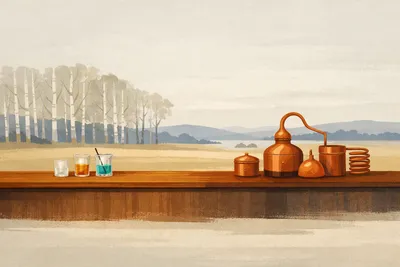
When every Western gin brand vanished from Russia in 2022, bartenders didn't wait for replacements. They built 426 of their own.

A beauty subscription box that couldn't scale. 200,000 customer profiles that could. SUGAR Cosmetics' product-development engine was built on the data its predecessor left behind.

Twin crises — systemic honey fraud and mass bee die-offs — are forcing Russia toward branded products the world has never catalogued.

Four Peranakan women built Indonesia's jamu industry. A century later, their dynasties face succession — and no investor database has noticed.
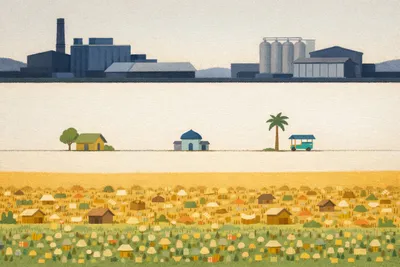
Between Indonesia's food giants and 1.6 million micro-producers, crisis-tested founder-owned brands occupy a band no database tracks.
Peak acclaim meets deepest crisis in twenty years. Three marquee bodegas in distress. A founding generation approaching transition.

$382M in halal exports — second only to Brazil in the Middle East. The crisis-tested founders who built this sector are invisible to the world.

A 240-year tradition, an 18x export surge, and founders who survived fraud and genetic collapse — invisible to every database.

Africa's largest honey producer exports almost nothing. War, diaspora founders, and a standards revolution are changing that.

The founders who built Vietnam's private consumer economy under Doi Moi are entering the succession window — with no plan and no institutional buyer mapped.

Karimov suppressed private enterprise for twenty-five years. The founders who survived are now ageing out together -- invisible, unplanned, and simultaneously in play.

An empire of founder-owned brands built by people without Emirati passports -- and no institutional buyer has found them yet.

Two reform waves created two founder cohorts, both approaching the succession window simultaneously. The dual-crisis NDD archive makes Turkey the richest transformation market in the region.

Two validated exits, five PE funds already hunting, and only 11% of family businesses with a succession plan. The thesis is proved. The gap is still vast.
The island that built the world's best bicycles and pineapple cakes is ageing out of founder control. Almost no one outside Taiwan has noticed.

A generation forged by four crises in forty years is entering the succession window. The map has never been assembled.

Three reform waves, three founder cohorts, converging succession pressure. South Africa's post-apartheid founders are ageing out with almost no succession infrastructure.

A reform wave that created new consumer sectors overnight. Two founder cohorts, one intelligence gap — both still largely undocumented.

A generation of founders forged by five crises — and 500 Western brand exits — is entering succession. The intelligence gap is total.

Soviet springs, crisis-tested founders, and a post-sanctions reshuffle the world missed — a therapeutic tradition invisible to global markets.

Russia invented kefir. The world adopted it. A mining family, a German intern, and a student are building what heritage alone could not.

A generation of founders forged by typhoons, volcanic eruptions, and the Asian Financial Crisis is entering the succession window. The 60/40 constitution makes local intelligence essential.

Alicorp just paid $72.2M for a superfood brand most investors had never heard of. Six more sectors are waiting. The founders have no plans.
The most crisis-tested founders we cover -- forged by occupation and blockade -- entering the succession window with no plans and no partners.

A generation forged by compounding crises is entering the succession window. The first institutional buyer has already moved.

Nigeria's first-generation consumer brand founders -- forged by the oil boom and tested by the naira crisis -- are entering the succession window with almost no plan.

A liberalisation wave created Morocco's founder generation. Now 150,000 family businesses approach transition with almost nothing in place.

The NAFTA generation built Mexico's most exportable brand sectors. Now they are ageing out — with almost no succession plans and one buyer already ahead of everyone else.
A generation built on Mahathir's industrial wave and hardened by the 1997 ringgit collapse is ageing out with no succession map.

Three crises. Three sectors. Thirty to forty founder-owned brands surviving the unsurvivable — and no institutional investor has found them.
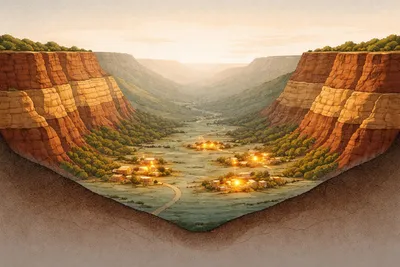
A reform-era founder cohort built East Africa's strongest consumer brands in total invisibility.

Soviet-era factory founders aged 50–72, crisis-hardened by four national ruptures, entering the succession window with no plans and no buyers.
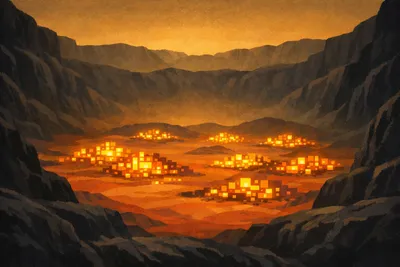
Sanctions eliminated Western competitors and forced a generation of Iranian founders to build from scratch. Those founders are now entering the succession window, still invisible to every database.
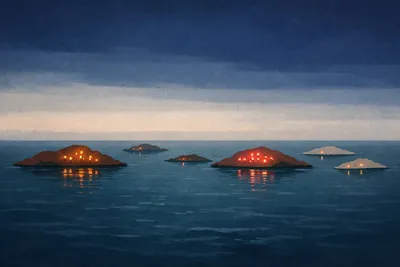
Two founding waves, one window: Indonesia's succession crisis is arriving on two schedules simultaneously, with a halal deadline forcing the pace.

A generation of founders built India's consumer brand ecosystem from the ruins of the License Raj. They are ageing out simultaneously, and no one has mapped what they built.

The 2006 Russian embargo erased 87% of Georgia's wine export revenue overnight. The founders who survived are now entering the succession window.

The founders who built Ethiopia's consumer sectors through war, currency collapse, and forex crises are ageing out. No one is watching.

Three currency crises, two revolutions, one career. Egypt's most crisis-tested founders face succession -- and Gulf capital is already moving.

The newest private economy in the world is five years old and already producing brands. The window to document the founding generation is narrow.

A generation of founders forged by narco violence, FARC extortion, and two reform waves is exiting — into a market that has never learned to find them.

Two reform-era founder cohorts are entering the succession window simultaneously. Only 21% have a plan. Most are invisible to any existing database.

A generation of founders who built Chile's export economy across 25 years of growth is now ageing out — with only 15% holding a succession plan.

Cloves grew nowhere else on Earth. Ternate held a total monopoly for millennia — until one sack of stolen seeds destroyed it all.

A generation forged by hyperinflation, six currencies, and a savings confiscation is entering the transition window. Most have no plan.

The founders who built Bangladesh's $47B garment industry are ageing out. They have a hard deadline: November 2026.

Behind the oligarchs, a generation of agricultural founders built genuine brands in sectors too small to capture. They are ageing out with no succession plans.

A generation of founder-politicians who built empires on patronage lost their protection in 2018. One PE deal has ever been done.

A generation of founders forged by five crises in thirty years is entering the succession window. One buyer already holds four Argentine brands.

No country code, no sovereign port, $1,000 per container in checkpoint surcharges — and the world's only olive oil with ROC, Fair Trade, USDA Organic, and EU Organic certification simultaneously.

A $150M industry where 95% has no label, 99% of firms are family-owned, and zero appear in PitchBook. The founders are ageing out.

24 phone brands, zero factories. Every North Korean handset is Chinese hardware with a surveillance layer. How donju capital works.

A $12 billion private capital class builds consumer brands where private property cannot legally exist. Succession is structurally impossible.

A nation of 3.4 million with seventy million livestock built a first generation of consumer brands from nothing. Now the founders are ageing out.

Two foreigners bought Russia's oldest factory. Six years later, only two options remained: total commitment or permanent closure.

Malaysia's local coffee chains outnumbered Starbucks. The secret: kopitiam culture, halal certification, and founders forged by crisis.

Switzerland exported zero watches to Russia in January 2023. The sector it left behind had been quietly building for three decades.

A dome builder. A programmer. A violinist. They built Russia's specialty cheese sector from nothing and won gold in France.

Famous Russian porcelain names are all corporate-owned. The real story: career-pivoters building an artisan movement from the wreckage.

A 106-year Teochew community bet, a semiconductor giant, and an art school started with seven students — Penang's private colleges.

Malaysia built 616 private colleges, then watched 232 disappear. The survivors were not the largest — they were the most crisis-tested.

590 days of lockdown tested every Malaysian coworking operator. The survivors are building one of Asia's fastest-growing flex markets.

Ivan the Terrible killed 110,000 in 1552. Five centuries later, the Qolsharif Mosque rises again. Identity survives total defeat.

Iran grows 400 date cultivars and produces a million tons yearly — with zero global brands. Bateel sells at $46/kg. Iran exports at $0.64.

He sold his house, his car, commuted by taxi. Today he holds the Middle East's first Swarovski license. Iran's leather sector hides 35 brands.

¥190B invested. Seventeen cars from one brand. Three founders fled the country. Eight brands that prove capital is not resilience.

Russia's sole Abkhazian wine importer became its largest overnight — not through strategy, but through a currency crisis no one saw coming.

500 EV startups, ¥200B subsidies, 80% mortality. Six founder-owned survivors emerged from China's most brutal automotive shakeout.

A chef in Kuala Lumpur and a logistics man in Shanghai independently built Italian food empires by solving the same ingredient problem.

He built Russia's organic cosmetics empire on mythology — then died without a will. The succession war that followed nearly destroyed everything.

Fifteen rival Mongolian cosmetics makers formed one collective export brand. The rivals who hid formulas now share a Berlin storefront.

A bottle sold for 750,000 rubles at auction. The grape: Krasnostop Zolotovsky. Russia's wine revolution — invisible, undeniable.

What if the best succession means leaving the family business? The Uzunovs discovered how knowledge can transfer without institutions.

Only 3% of family businesses survive to the fifth generation. The Khimichevs beat those odds—by inheriting mission, not money.

A boutique winemaker bought a Soviet giant producing 60 times his volume. What made it work was knowing exactly what not to merge.

Banks refused, 15 years at risk. Abramovich's circle acquired 70%—exiting four years later with Russia's first World's Best Vineyards entry.

$463M insurance exit. $110M wine bet. First Russian 91-point Parker wine. Then the Nikolaevs walked away—mission accomplished.

Vadim Lapin demanded his son be partner, not heir. Mark won "Best Restaurant" independently. Three days after Vadim's death, the test begins.

They had 9,000 products from other brands. Then they looked at Amazon's plans and realized they needed something no one else could sell.

Winnie Loo built Malaysia's premier salon brand across 47 years. Her son earned it by extending the business before she handed it over.

When Dezan Shira expanded to India and Vietnam in 2008, skeptics called it crazy. A decade later, US-China tensions proved the bet prescient.

A Hong Kong chef bought a bottle as a tourist, then declared it 'the best in the world' on TV. That made sesame oil 70% of revenue.

Four harbormasters managed commerce in 84 languages at Malacca's peak. When monopolists captured the port, merchants relocated.

A rebel fugitive built institutions that outlasted three colonial governments. Legitimacy flows from solving problems, not official approval.

Banned from Hong Kong, expelled from Japan. Sun Yat-sen found refuge in Penang, where merchants who never saw China funded its liberation.

67-day knowledge transfer. 'Winery of the Year' 12 months later. How Samsonov defied the 60–70% failure rate of founder transitions.

Ruble collapsed 70%. Competitors raised prices 200%. Ostrobrod froze them—destroyed margins built 30 years of customer loyalty.

When crises hit, emerging market brands don't scramble for suppliers—they own them. Infrastructure built for one crisis outlasted the next.

In 1292, Marco Polo called it the greatest port in the world. Today most have never heard of it. The lesson: trust networks outlast governments.

Abkhazia peaked at 10.4% of Russia's wine imports—then excise shocks and bulk dependence cut its share to 1.75%. War-hardened, now vulnerable.

Three factories, three brands, 80 years of production—hidden behind sanctions. Not because they failed. Because no one looked.

From yak milk and -40°C botanicals, Mongolia builds EU-certified beauty brands — nomadic tradition meeting modern organic certification.

Alkhas Argun called his government 'disgusting' for expelling a UN expert on espionage suspicions. Defending quality meant risking everything he built.

Pollution allergies became a business empire. Columbia graduate Khulan couldn't find natural skincare in Mongolia—so she created Lhamour.

Sanctions closed Europe overnight. Fanagoria tripled China exports in 90 days—800,000 bottles redirected in three months proves agility wins.

$110M bet on overlooked Russian terroir everyone ignored. Fifteen years later, Lefkadia ranked World's Best Vineyards Top 30—ahead of Tuscany.

Boris Titov rescued a 136-year imperial estate. His son inherited it, then sanctions arrived—and the real succession test began.

Valery preserved dying Don Valley grapes for 23 years. When his son Maxim took over, the resulting wine sold for 750,000 rubles.

From provincial Ufa to Paris Fashion Week. No connections, no proximity, no fashion pedigree. Geographic disadvantage became creative edge.

$5,000 startup created 100,000 jobs across 45 countries. World's first Fair Trade footwear proved poverty wasn't the problem—invisibility was.

$16B peak → 98% crash → the strategic lesson. Traffic arbitrage builds awareness, not loyalty. Only brand equity protects margins.

PayPal blocked Mongolian payments. The workaround—foreign warehouses just to accept credit cards—became infrastructure competitors couldn't replicate.
Know a brand at an inflection point? Need intelligence on a specific market or sector? Let us know.
Type to search across all brands, founders, and insights